Practice makes perfect. This common cliche is a driving motivation for many people who wish to hone in a certain skill. After interviewing Laurran Dong, a recent SJSU graduate and emerging freelance photographer, I realized she was motivated by the same phrase. As a self-taught photographer it is especially important to practice and understand the details of photography. She identifies her passion for photography emerges from her mother’s own passion. Yet, she has pushed herself to learn and better her ability with a camera. Dong explained how she has established her freelance career by taking photographs of as many people as she can and accepting the feedback of others.
Throughout my life, I have encountered many people who beginning freelance photography on their own. Either as a hobby or a way to make an extra income, freelance photography is a growing field. Individuals like Matt Korinek, a commercial fitness, lifestyle and editorial photographer, have made their careers with no formal training. In his blog he explains he is not simply self-taught but learned through trial and error and the information online. He writes “In terms of photography, knowledge is the first step on a never-ending staircase to perfect the “how” so that a photographer can explore the “why.” It’s only by putting the knowledge to use that real growth occurs.” The first step is to understand the concepts of photography and apply it to ones work. Learning photography is not about being self-taught, but taking the information available in the internet or accepting knowledge from fellow peers to cultivate ones skill.
Looking through recent issues of the New Yorker, I came across a profile that featured a photographer who is not widely known but dedicates himself wholeheartedly to his work. The following link will lead you straight to the article, “A Photgrapher at the Ends of the Earth” by Dana Goodyear.
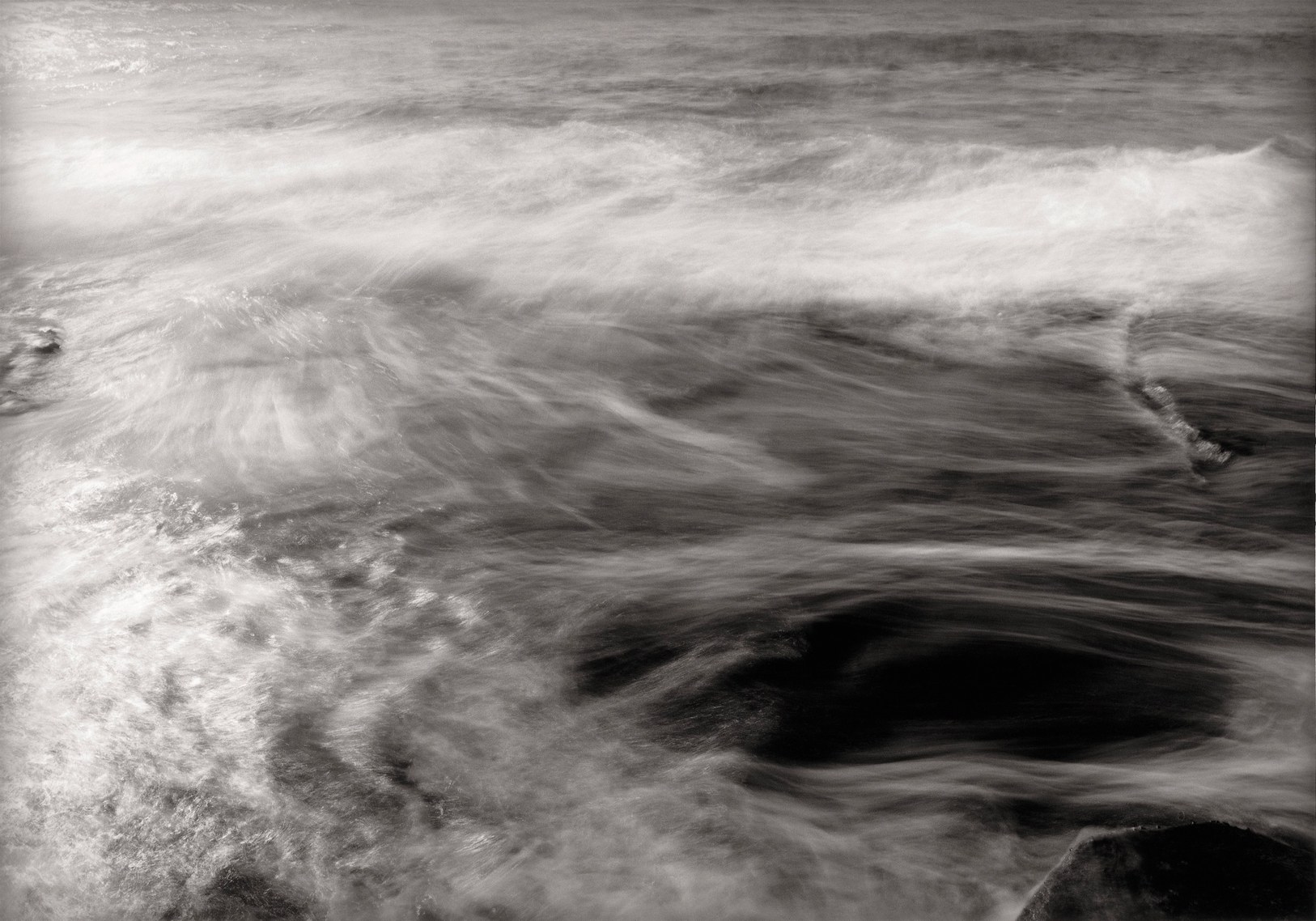
The article features Thomas Joshua Cooper, a self made photographer that travels to various remote locations to capture the depths of nature. The author begins by describing his 32 year long project “The Atlas of Emptiness and Extremity.” It is a series of black-and-white photographs taken in remote and isolated locations “on five continents and at both poles, along the perimeter of the Atlantic basin.”
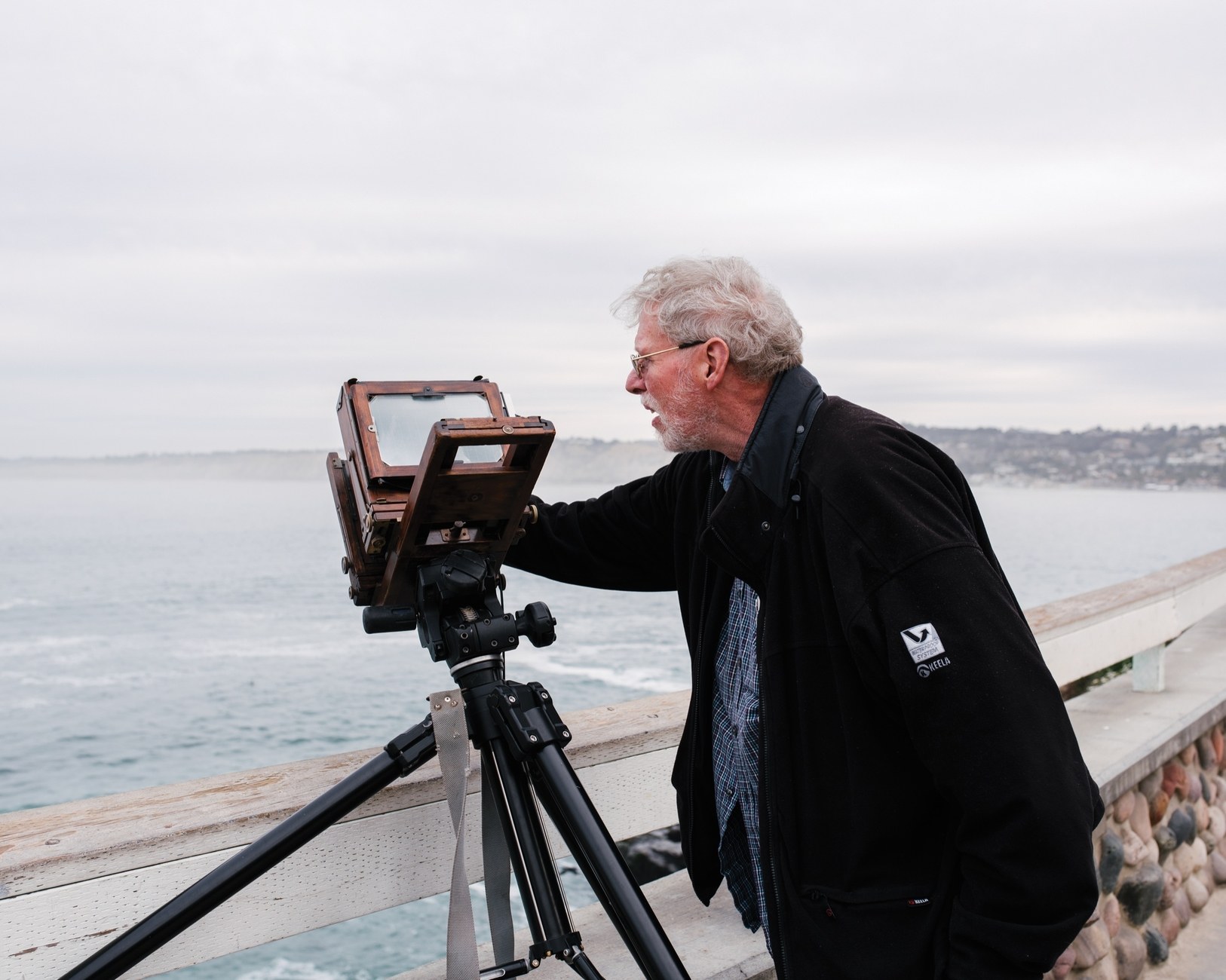
Despite his age, Cooper is currently 72 years old, continues to use his analog camera to capture what he considers the “edge of the earth.” Cooper has a wooden field camera built in 1898, a significantly different tool that is typically used today. His concept for his work is capture the Atlas in an untamed nature. He takes on the role of an adventurer to obtain images without the disruption of people. Cooper was born in California and has is part Cherokee and Jewish. His distinct heritage plays a role in his work and how he captures pictures.
Throughout the article, the author provides various anecdotes about Cooper’s life and work that describe him as a humorous and dedicated photographer. His work is a tribute to his talent as a photographer and praise for nature. The author is able to bring Cooper to life in the article, by quoting him and looking at his mannerisms.
When I initially looked at the article, I was intrigues by the formatting of the article. When you click on the link you will find yourself staring at an expansive black-and-white photograph the rocky shores surrounded by misty clouds. Under the title of the article it reads “Thomas Joshua Cooper risks his life to document the world’s remotest places.” With this line the author quickly draws a reader into the work.
Then she goes on by explaining his work as what makes him so unique. His style, method, and depiction make him an intriguing character that a reader would want to know about. Since I am interested in photography I was instantly hooked by his perspective and concept in his ongoing work. His use of a wooden camera also made him more compelling to an audience stuck in a digital era. His unique skill is not common among photographers of today.
Then the author continues the article by providing several anecdotes that are both humorous and informative. With Cooper’s quotations scattered throughout the article, his person comes to life. Not only is his work influential but his character is incredibly interesting.
Now -a-day Photoshop and photo editing are a guaranteed process in the production of most of our media, be it advertisement or social profiles. Images are airbrushed and polished to look a certain way.
But is it a tool to enhance a photograph or manipulate it?
I began using editing tools to fix simple lighting errors in my photographs. When I used my camera I would use a manual setting so I was constantly forced to change shutter speed and aperture depending on the lighting.
The shutter speed of a camera is the speed and length of time that a lens is open while taking a picture. A fast shutter speed will only be open for a quick second so very little light will be captured. While a low shutter speed will mean the lens is open for a longer amount of time so a lot of light will be captured in the image.
Aperture indicates how wide open a camera lens will be. The more open the lens is the more light will be seen in the image.
As a beginning photographer I experimented a lot with these two settings and mistakenly ruined many images because I allowed to much light to enter the camera or vice versa.
Then I began to use Adobe Light Room, and editing tool that enables the user to change light setting and the shadow quality of the image. Light Room has various features that allows a user to not only change the light setting but to enhance color, blur any blemishes highlight various features of an image.
The images above show the way in which I was able to enhance different colors, making the image look more vibrant and creating more contrast.
Yet my editing skills were limited compared to the changes others have incorporated in their images. Light Room has been used to bring more life and depth to various photographs. Some may say its a cheat to reality, but in a way its a form of artwork where a photograph is simply the skeleton of a larger work that needs refinement.
We had been walking through the bustling
streets of New York for hours; tortured by the unexpected rain and then hot,
humid sticky weather that followed. Sweat clung to our skin as a permanent outer
layer. For all my misconceptions of New York, I was not expecting the bipolar
weather. It was our first day in New
York; my friends and I had decided to take a mini vacation before the beginning
of the school semester. Feeling the ache of my feet and the exhaustion of being
on airplane for five hours, all I wanted to do was rest a little. But it was
New York! We couldn’t waste our time simply sitting or waiting for our AirBnb. Plus,
my stomach had been rumbling for the past hour, it was about time we try some
of New York’s famous cuisines.
We were beginning to understand the organized chaos of walking through Times Square and the surrounding streets. There were people constantly on the move, tourists randomly stopping to take a quick picture or look at the street vendors selling all kinds of I heart New York souvenirs. Not to mention the dozens of food carts selling hot dogs, gyros, and kebabs. The smell of barbecued meat mingled with muggy stagnant air and garbage that wafted through the air. Any moment of hesitance in front of the food carts and the vendors would lure you in, “Hey, we have hot dogs, kebabs… What do you want?” We where here to experience New York, so we turned to a random vendor. The moment we approached him he began searing hot dogs on the stained metal skillet, the smell of cooked meat polluting our noses. My stomach growled in response, finally something to eat.
The wall of heat hit me once I opened the car. I was sure
that the air inside my car was hotter than the blazing heat inside. I wanted to
stay home, but I had promised a friend that I would take their prom pictures. I
like taking pictures of the outdoors, but people are an entirely different
subject. I must make sure that they are positioned right, and all their awkward
tension doesn’t show in the photographs. Landscapes are easier, all I must do
is find the right angle and take the shot. I stepped into the car, the hot air
incasing me. Even the steering wheel seared my hands. Ugh what I would give to stay home in the air-conditioned rooms. As
I was driving to the park, I could feel the sweat dripping down my back. It’s going to be okay, I thought. I only
have to get a s few good pictures of the couple, I just hope that the park
wouldn’t be too crowded. Right when I got to the parking lot, I heard the ding
of the phone. I looked at the message with a sigh, “I hope its ok, but some of
my friends were hoping you could take some pictures of them too.” It was going
to be a long day.
Section 2
The sun was peaking out of the mountaintop, over the silent
terrain. The only sound that could be heard was the chirping birds waking up
with the rising of the sun. The purr of an engine broke through the quiet of
the early morning. When the car stopped, two people slid out wearing hiking
boots. They each carried a small pack and the girl in the left carried a camera
around her neck. The click of a camera resounded through the path as the girl
snapped pictures of the rising sun and chirping birds. Peace encompassed both passersby,
as they took in the green of the hills and birds flying overhead. They became
part of a serene image.
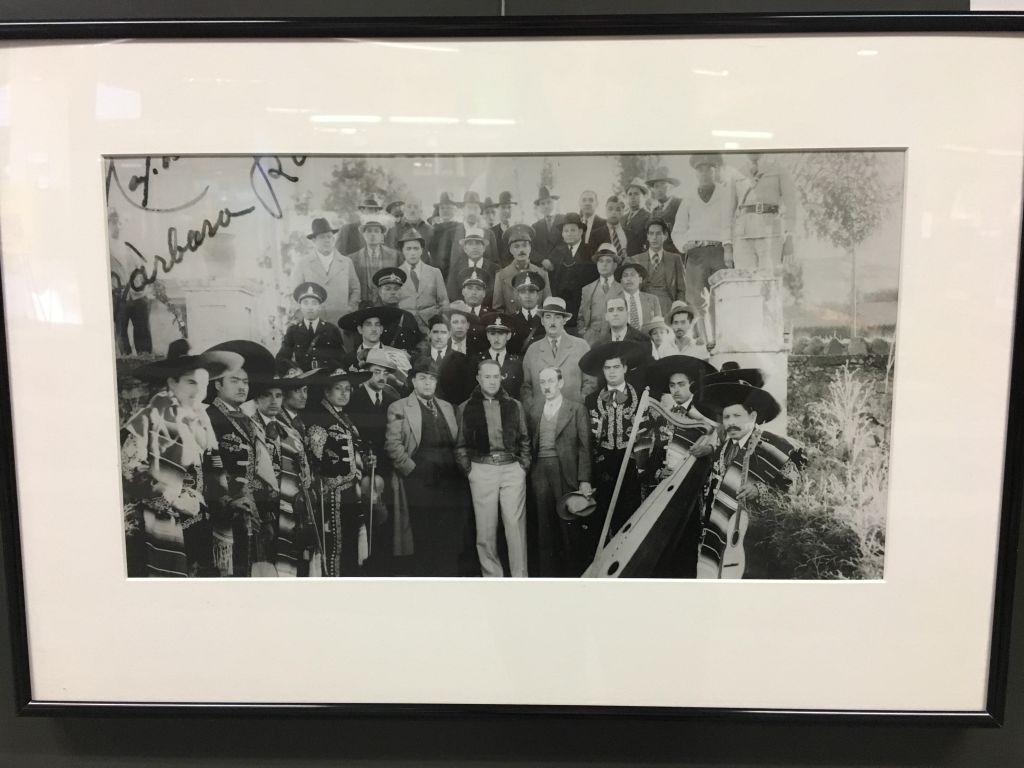
Situated in the 5th floor level of the King Library, there is an ongoing exhibition displaying “A History in Photos: El Mejor Mariachi Del Mundo.” By integrating cultural Latin icons and the art of photography, San Jose State University continues to be a place for multi-cultural expression. Originally stored in the Mexican heritage Plaza, this collection of photographs titled A Century of Mariachi Music: The Legacy of Mariachi Vargas de Tecalitlan in presented in SJSU King Library AAACNA center. The exhibition will be taking place from August 19th to September 27th, showcasing various photographs of the famous Mariachi Vargas group and the progression of the mariachi band’s symbolism to the mexican heritage. According to the Assistant Professor of Chicana and Chicano Studies, Estevan Azcona, the Mariachi represents “a story of modernity and a shift from ‘old’ to ‘new’ ways; from a country based in its regional cultures to a nation finding its way within the emerging complex of technology, the global economy, and international relations” (Azcona). Throughout the exhibition one, finds themselves enthralled by the development of the mariachi group. The images of simply dressed countrymen assembled on the outskirts of a crop field are developed to photographs of elaborately dressed individuals holding themselves with a mark of pride. These images not only tell the story of a group of people, but an entire culture revolutionized by their music and traditions.
Don’t miss out on these iconic photographs detailing the importance of tradition and the act of photography able to capture these movements throughout time.
The daunting edifice of rock loomed before my being, a magnificent piece of earth erected decades ago by the forces of nature. I stood awestruck and intimidated by its grandeur seeming to be infinite. The mountain’s peak remained obscured by a condensed configuration of somber clouds. Compelled by the alluring visage, I began the tedious excursion towards the veiled summit. Would I be able to surmount the arduous journey uphill or would my limbs flounder to a stop before reaching the mountain’s height?
With trepidation, I pushed my limbs up the dusted path careful not to slip on the dispersed sediments protruding from the ground. Propelling forward, I felt a growing throb throughout the upper regions of my legs as my muscles strained against the upward movement. Gravity pushed against the frame of my existence urging me to surrender. The wind became an unnerving nemesis, seeping through the fibers of my garments with its icy touch. Every breath of air I took pierced my lungs, leaving them frigid and raw.
My fingers coiled around my camera, as I stretched my limbs forward.
I was attempting to traverse this treacherous terrain for a picturesque image. As
my lungs ached and my legs buckled under the strain of the hike, I found it to
be a ludicrous reason. Was such an image worth the value of this journey?
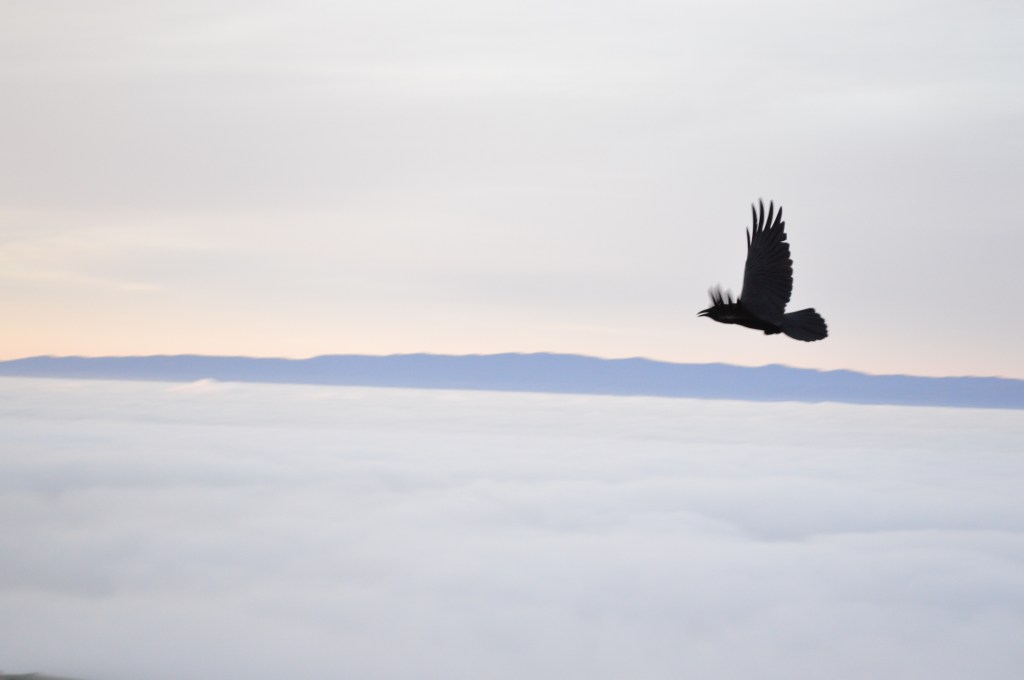
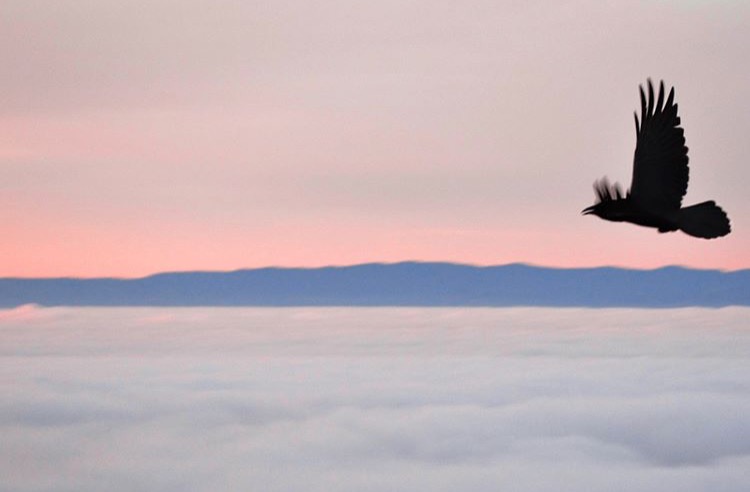
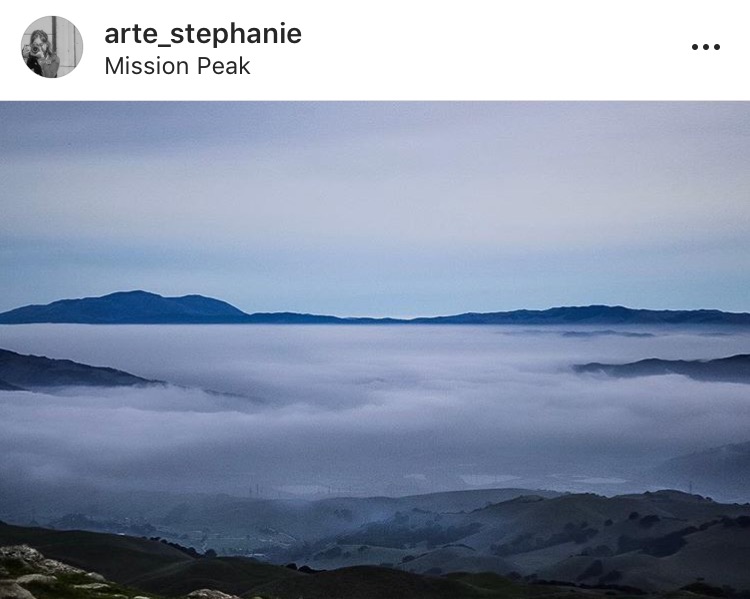
Minutes felt endless under the exertions of this pilgrimage, but I moved forward reluctantly. Reaching the dense wall of mist, I ascended through the swirling fog into a clearing. I stood above the billowing clouds, an ocean of endless white. This was worth it, I proclaimed as I grasped my camera and took the shot.
Photograph taken from Mission Peak
Conversational
Looking up, I saw the mountain hundreds of feet above my head. I felt small as I stood at the base of Mission Peak. How could I ever climb something so big? I wasn’t even able to look at its peak because dense fog surrounded the top, hiding the height of the mountain. Was my body even capable of going that high? I was already thinking of quitting as I looked at the never-ending path. But I had woken up at 5 AM. Yes 5 AM! Just to take a picture of the view. I wasn’t about to quit now, although it was very tempting.
After a couple minutes of staring down Mission Peak and
debating if I should run back to my car and drive back to my house where a nice
warm bed waited, I did the unthinkable and started walking up. Let me tell you,
I was aching all over! My thighs were burning, my calves were burning, even my
lungs were burning as I breathed in the icy air. I had to stop so many times I
lost track of how many. For a moment I considered going back. Why was I even
doing this? For a picture I could get off the internet if I typed “Mission Peak
Views”?
Every moment climbing that mountain felt horrible. I would
stop to catch my breath every few minutes as my lungs screamed in pain. Go back! When you aren’t used to hiking it is hard to find the
endurance to keep going. I honestly don’t know why I kept going, but I kept
taking steps forward. The fog clung to my hair, I probably looked like a
madwoman with chapped lips and frizzy hair. But at this point I didn’t care. I
just wanted to be done.
When I walked through the thick wall of fog into the clear air, I was stunned. I have to admit that it was breathtaking to say the least. The fog looked like a soft blanket extended over the land. It felt like I was on top of the world. With the blink of an eye, I pulled out my camera and took the shot.
Hands steady around my camera, I inhale holding my breath and “click.” Looking at the screen of my Nikon I see an immortalized instant, not half-bad compared to all the other slightly blurred images I’ve taken. I am far from a professional photographer but I like the concept of photography. Looking through the lens and dictating, this precise moment must be infinite, is empowering to say the least. It is a moment you create in a blink of an eye. Like the saying goes “a picture is worth a thousand words,” an entire narrative defined by a moment.
As an English student, I can say that it takes
time and practice to get a good 1000-word essay. I’ve learned it is the same
for a photograph, there are many elements that go into creating the precise
image. What is your focal point? How is the lighting and the angle? How grainy
do you want your image be? There are many factors, beyond the single
click of a camera, defining what your image says.
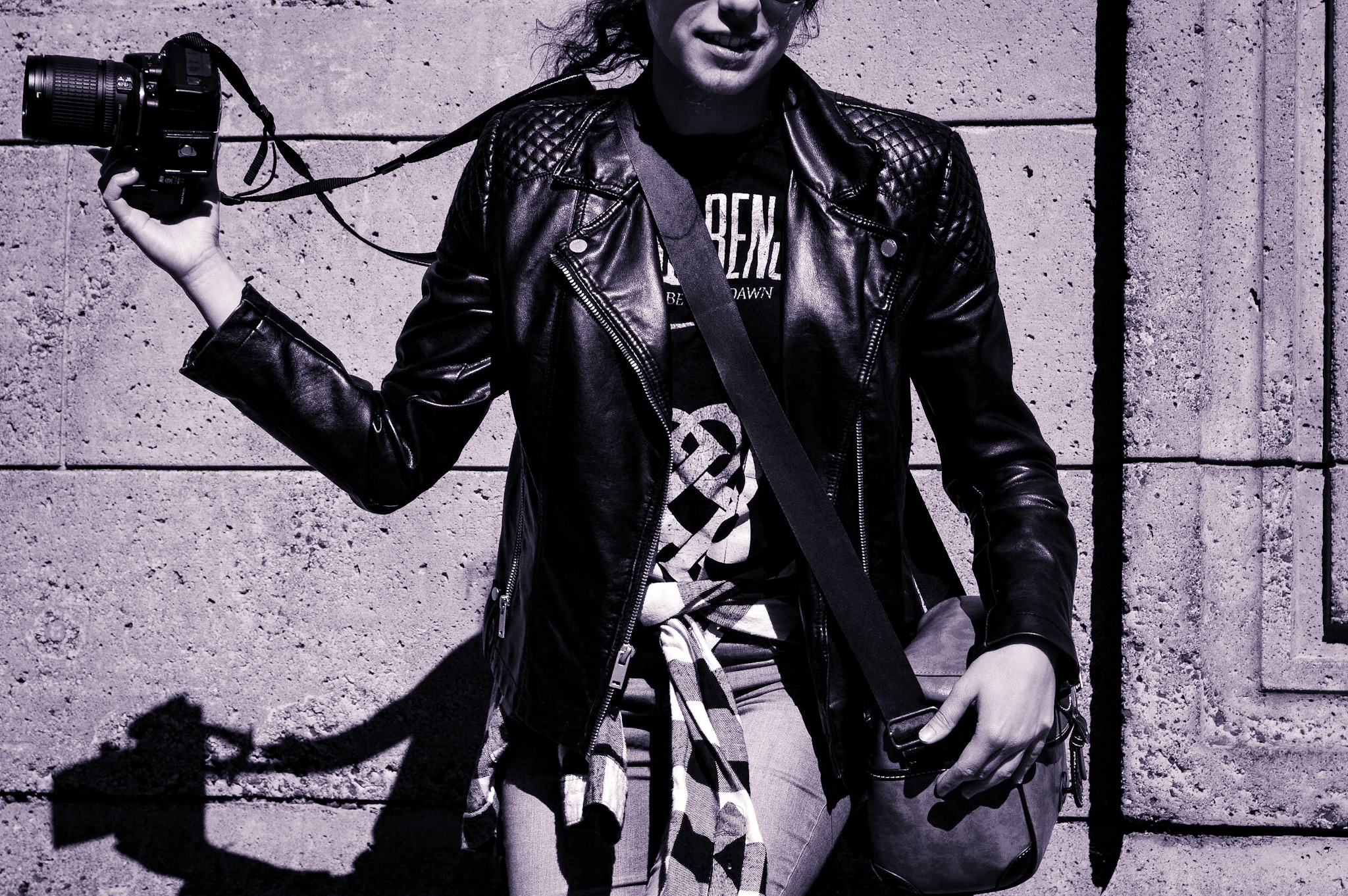
I took the image above a
few years back when my friend and I adventured around San Francisco taking
snapshots of anything we found remotely interesting. I had taken plenty of
mediocre images and was simply having fun attempting to capture a memorable
moment. Taking a look at my friend I found it curious how she held her camera
angled, as she surveyed the area. We were definitely not professional
photographers but she possessed a certain sense of authority. She held her camera
as an extension of herself, a tool to capture her perspective. The same way a
pen becomes an extension of ourselves when we write.
This is an example post, originally published as part of Blogging University. Enroll in one of our ten programs, and start your blog right.
You’re going to publish a post today. Don’t worry about how your blog looks. Don’t worry if you haven’t given it a name yet, or you’re feeling overwhelmed. Just click the “New Post” button, and tell us why you’re here.
Why do this?
Because it gives new readers context. What are you about? Why should they read your blog?
Because it will help you focus you own ideas about your blog and what you’d like to do with it.
The post can be short or long, a personal intro to your life or a bloggy mission statement, a manifesto for the future or a simple outline of your the types of things you hope to publish.
To help you get started, here are a few questions:
Why are you blogging publicly, rather than keeping a personal journal?
What topics do you think you’ll write about?
Who would you love to connect with via your blog?
If you blog successfully throughout the next year, what would you hope to have accomplished?
You’re not locked into any of this; one of the wonderful things about blogs is how they constantly evolve as we learn, grow, and interact with one another — but it’s good to know where and why you started, and articulating your goals may just give you a few other post ideas.
Can’t think how to get started? Just write the first thing that pops into your head. Anne Lamott, author of a book on writing we love, says that you need to give yourself permission to write a “crappy first draft”. Anne makes a great point — just start writing, and worry about editing it later.
When you’re ready to publish, give your post three to five tags that describe your blog’s focus — writing, photography, fiction, parenting, food, cars, movies, sports, whatever. These tags will help others who care about your topics find you in the Reader. Make sure one of the tags is “zerotohero,” so other new bloggers can find you, too.
 Stephanie's Blog